

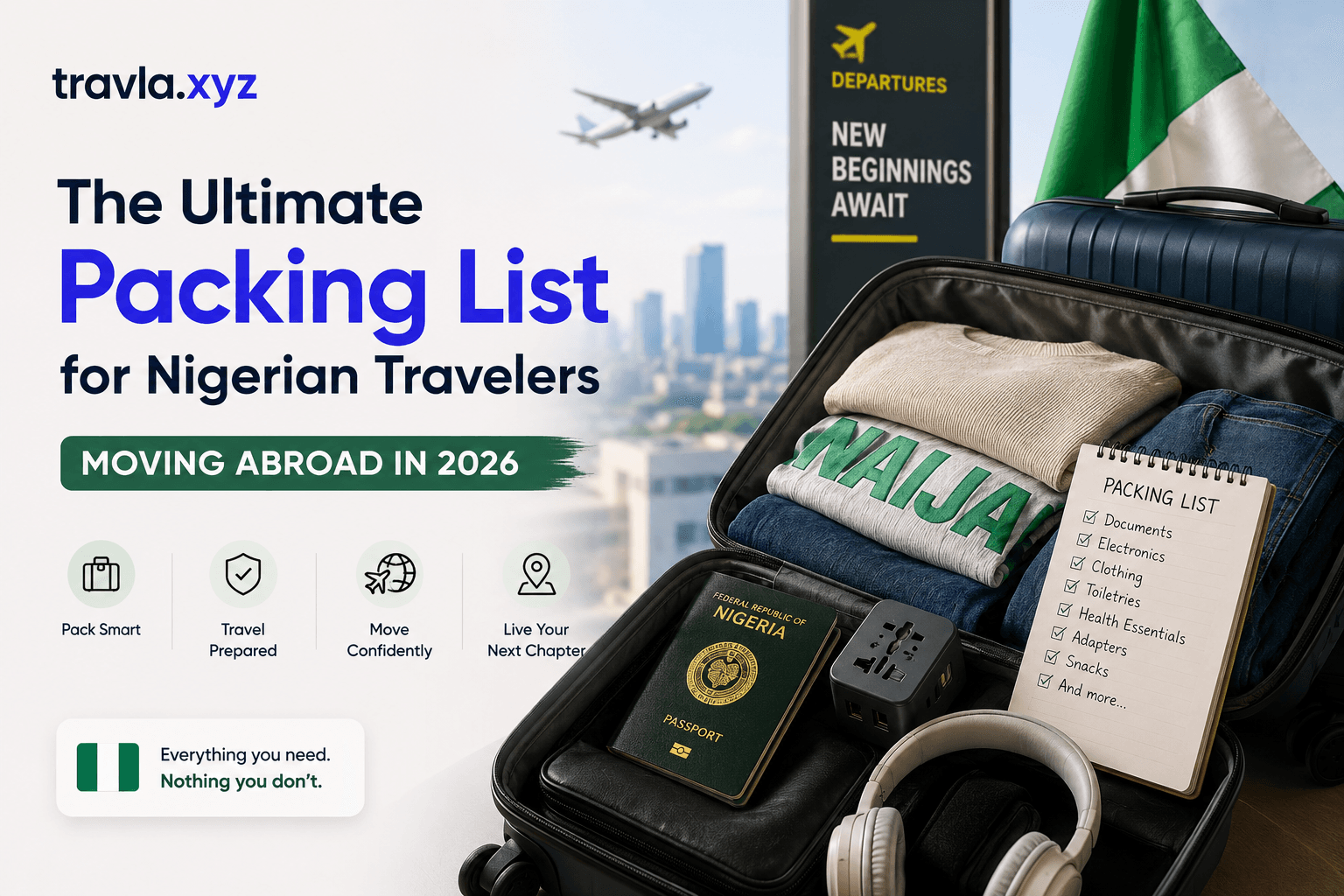
There is a specific kind of stress that comes with packing for a move abroad. It is not the same as packing for a holiday, where forgetting your sunscreen is the worst that can happen. When you are leaving Nigeria for the United Kingdom, Canada, the United States, or anywhere else in the world, the stakes feel entirely different. You are not just packing clothes, you are packing a version of your life.
And yet, so many Nigerians who have gone through this process will tell you the same thing: they packed the wrong things. Too many clothes they never wore. Not enough of the practical documents and items that turned out to be genuinely hard to get abroad.
Things they assumed would be easy to find overseas and discovered, sometimes expensively, were either unavailable, unaffordable, or simply not the same.
This guide exists to fix that. Whether you are moving for studies, work, a relocation programme, or permanent residency, this is the most thorough, honest packing list you will find, built specifically for Nigerians making the move abroad in 2026.
Before You Pack Anything: The Mindset Shift
The first thing to understand is that packing for relocation is not about bringing everything you love. It is about bringing what you genuinely cannot get or replace easily at your destination, and leaving behind what you can.
Storage space in apartments abroad, particularly in the UK and Canada, is often significantly smaller than what Nigerians are used to at home.
A room in student accommodation in London or a bachelor apartment in Toronto will humble you very quickly if you arrive with six oversized suitcases expecting the same storage capacity as a three-bedroom flat in Lekki.
The goal is to pack strategically, not sentimentally.
With that said, let us get into it.
Section One: Documents — The Non-Negotiables
Nothing on this list is more important than your documents. Losing or forgetting a critical document abroad can create problems that take months and significant money to resolve. Before a single item of clothing goes into your suitcase, your documents should be sorted, organised, and protected.
Here is what you need to carry, physically and in digital backup:
- International passport (with at least six months validity remaining beyond your travel date)
- Visa and entry clearance documents, printed and in a dedicated folder
- Birth certificate: both the original and certified true copies
- Nigerian National Identification Number (NIN) slip or card
- Academic certificates and transcripts, originals and certified copies. Do not rely solely on digital versions, as many institutions and employers abroad will request physical originals.
- Statement of results if your full certificate has not yet been issued
- NYSC discharge or exemption certificate if applicable.
- Medical records, including vaccination history — particularly important post-COVID, as some countries still require documented vaccination status.
- Prescription letters from your doctor if you take regular medication, explaining what the drug is and why you need it
- Police clearance certificate — many visa categories and employer background checks will require this
- Marriage certificate if applicable
- Proof of address documents from Nigeria’ utility bills, bank statements, tenancy agreements. These may be requested during identity verification processes abroad.
- Bank statements covering the last three to six months
- Reference letters from previous employers or academic supervisors
- Two or three passport photographs taken against a white background — countries vary on their photo specifications, but having extras is never a mistake
Keep all originals in a waterproof document organiser that travels with you in your hand luggage, not in your checked bag.
Make digital scans of every document and store them in at least two places — a secure cloud storage service and an email folder you can access from anywhere.
Section Two: Money and Financial Preparation
This is an area where many Nigerian travellers underestimate the preparation required.
Before you travel, ensure the following:
Inform your Nigerian bank of your travel plans so your cards are not flagged and blocked for suspicious foreign transactions.
Open a domiciliary account if you do not already have one. Having USD, GBP, or EUR in a Nigerian account gives you access to funds before your foreign account is fully set up.
Carry some physical foreign currency — enough to cover your first week of expenses including transport from the airport, food, and any immediate purchases. Do not rely entirely on cards in the first few days.
Research and sign up for a multi-currency digital wallet such as Wise or Revolut before you leave Nigeria. These services allow you to hold and spend in multiple currencies with far lower fees than traditional banks, and they are easy to set up while you still have Nigerian documentation to hand.
Understand that setting up a bank account in your destination country may take one to three weeks after arrival. Plan your finances accordingly so you are not caught short during that gap.
Section Three: Clothing — Pack Smart, Not Heavy
Clothing is typically where people overpack, and it is also where the cultural adjustment tends to reveal itself most quickly.
Here is the honest truth: the weather in most of the popular destinations for Nigerian migrants — the UK, Canada, Ireland, and parts of the United States — is not forgiving. And Nigerian wardrobes, built for heat and sunshine, are largely unsuitable for a British winter or a Canadian February.
What to bring:
Three to five versatile everyday outfits that can be layered. Think jeans, plain trousers, and tops that work in multiple combinations.
One or two smart formal outfits for job interviews, professional settings, or official appointments.
One traditional Nigerian outfit. You will thank yourself when a cultural event, a Nigerian community gathering, or simply a moment of homesickness calls for it.
Comfortable walking shoes — genuinely comfortable, not just attractive. Cities abroad involve a lot more walking than most Nigerian cities where driving or ride-hailing is the default.
One pair of smart shoes suitable for formal occasions.
Workout wear if you exercise regularly.
Underwear and socks for at least ten days — these are personal items you may not want to buy immediately on arrival.
Pyjamas or sleepwear — buildings abroad are often heated indoors but cold is a very present reality.
What to leave behind or minimise:
Excessive amounts of native attire. You likely will not wear most of it, and it takes up significant luggage space.
Clothes that only work in hot weather — sleeveless tops, light cotton pieces, and open sandals will see very limited use in colder climates.
Multiple pairs of shoes beyond what you genuinely need. Shoes are heavy, bulky, and widely available abroad.
Once you are settled, you will discover charity shops, outlets like Primark in the UK, or Value Village in Canada that make it inexpensive to build a climate-appropriate wardrobe without shipping it across the Atlantic.
Section Four: Skincare, Haircare, and Personal Care Products
This section matters more than most packing guides acknowledge, particularly for dark-skinned Nigerians whose specific skincare and haircare needs are not always well served by mainstream shops abroad.
Skincare:
Bring a good supply of your regular moisturiser, especially if it contains shea butter or is formulated for melanin-rich skin. Cold, dry climates can be brutal on Nigerian skin, and your usual product may not be available in the same formulation abroad.
Body lotion with SPF — yes, even in cloudy countries. UV exposure continues through cloud cover and glass.
Lip balm — heated indoor environments combined with cold outdoor air cause chapping very quickly.
Your regular facial cleanser and toner if you use them. Finding exact equivalents abroad takes time and trial-and-error.
Haircare:
If you are a woman who relaxes or treats her hair chemically, carry enough of your preferred relaxer or treatment for several months. Specific Nigerian or African haircare brands may be harder to source, and what is available in African beauty shops abroad can be significantly more expensive.
Edge control, hair food, and scalp treatments specific to your hair type.
Your preferred hair accessories — bonnets, silk scarves, and satin pillowcases. These items protect natural and relaxed hair during sleep, and the ones available abroad may not match your preferences.
If you wear wigs or extensions, bring a supply or have a plan for sourcing them at your destination.
Feminine hygiene products:
Nigerian women often find that preferred brands or specific product types are not available in foreign supermarkets, or are available only in specific ethnic shops at higher prices.
Bring a reasonable supply of your preferred products and research availability at your destination before you run out.
Men’s grooming:
Shaving sticks, shaving cream, and hair clippers suited for afro hair textures can be elusive in mainstream foreign shops. Bring your preferred clippers and blades. Research Nigerian or African barbers in your destination city before you arrive — they exist in most major cities but knowing where they are in advance saves time.
Section Five: Food Items — The Taste of Home
No packing list for a Nigerian moving abroad is complete without addressing food. This is not just about comfort — Nigerian cuisine requires specific ingredients that are either completely unavailable, seasonally restricted, or significantly marked up in foreign African grocery shops.
Items worth bringing in your luggage — within customs limits, which you must check for your specific destination:
Stockfish (dried) — widely used in Nigerian cooking and not always findable abroad.
Crayfish — ground or whole. This is one of the most distinctly Nigerian flavour ingredients and a small bag goes a long way.
Ugwu seeds, egusi, and oha leaves (dried), these are difficult to find outside African grocery stores and the dried versions travel well.
Palm oil — check your destination’s import restrictions. Some countries have limits on plant-based food products.
Iru (locust beans) — the dried form is compact and travels well.
Nigerian spices and seasoning cubes — Maggi and Knorr cubes are available in many countries but not always in the Nigerian formulations you are used to.
Dried pepper blends — this is personal preference, but many Nigerians swear by their specific blend and no foreign equivalent ever quite matches it.
Garri — a small bag for the first few weeks can be genuinely comforting before you locate an African store near you.
Ground crayfish and tomato paste in sealed packaging.
Important note: Every country has customs regulations on what food items can be imported. Fresh produce, most meats, and some processed foods are often restricted or prohibited. Research the specific rules for your destination country before packing food items. The last thing you want is to have your luggage flagged at customs because of an oversight.
Finding Nigerian food abroad is increasingly possible in cities with established Nigerian communities. London, Toronto, Houston, Dublin, and Minneapolis all have thriving Nigerian grocery shops. Research the options near your destination address before you travel — knowing where to shop for your ingredients removes a significant source of stress in the first weeks.
Section Six: Electronics and Gadgets
Electronics are expensive everywhere. If you have reliable devices in Nigeria, bring them rather than planning to purchase abroad on arrival.
Laptop — essential for most people, whether studying, working, or job hunting. Bring your charger and a universal adapter.
Smartphone — already unlocked if possible, so you can insert a local SIM card on arrival without restrictions.
Power adapters and voltage converters — Nigeria uses 240V electricity on Type D and G sockets. The UK also uses 240V with Type G, so if you are going to the UK, your Nigerian appliances may work without a voltage converter though you will still need a plug adapter. The US and Canada use 120V, which means Nigerian appliances with non-dual-voltage ratings will not work there without a proper converter.
Portable power bank — useful during transit and in the early days before you are fully settled.
External hard drive with backup copies of important files, photos, and documents.
Noise-cancelling earphones or headphones — long flights, shared accommodation, and noisy transport make these genuinely valuable.
Smart watch or fitness tracker if you already own one.
Section Seven: Health and Medications
Do not underestimate this section. Healthcare systems abroad operate very differently from what you are used to in Nigeria, and accessing prescription medication in a new country requires working through a process that takes time.
Carry the following:
- A supply of any prescription medications sufficient for at least three to six months, with your doctor’s prescription letter explaining each drug by its generic name, not just the brand name.
- Over-the-counter medications you rely on: pain relief, antacids, allergy tablets, vitamin supplements.
- Malaria medication if your destination requires prophylaxis or if you anticipate travel back to Nigeria in your first year.
- Your preferred brand of hand sanitiser and face masks — these remain useful for high-contact environments regardless of specific mandates.
- A basic first aid kit: plasters, antiseptic wipes, a thermometer, cold and flu medication.
- Register with a local GP or family doctor as soon as possible after arrival. In the UK, this means registering with an NHS General Practice. In Canada, it means finding a family physician or walk-in clinic. Do not wait until you are unwell to figure out how healthcare access works in your new country.
Section Eight: Bedding and Home Comfort Items
Depending on your accommodation situation, you may or may not need to bring bedding. Student accommodation and furnished apartments typically provide it. If you are moving into unfurnished accommodation, you will need to source it locally.
However, a few small comfort items are worth bringing regardless:
- A lightweight travel blanket for the flight and early weeks.
- Your preferred pillow if you are particular about sleep quality — this is a personal decision but worth considering for a long journey.
- A small photo frame or two with meaningful photos from home. It sounds small but it matters more than you expect in the first months abroad.
Section Nine: What NOT to Pack
Just as important as what you bring is what you leave behind. Here is a clear list of things Nigerian travellers commonly pack and later regret:
- Excessive quantities of native wear beyond one or two outfits.
- Multiple handbags or designer accessories that are heavy and add no practical value in early settlement.
- Kitchen equipment: Pots, plates, blenders, and similar items are inexpensive at charity shops and supermarkets abroad and are rarely worth the luggage weight.
- Too many shoes: Three to four pairs covering different needs is sufficient.
- Framed artworks or decorative items: These can come later once you are settled in a permanent space.
- Bulky towels: These are heavy, available everywhere abroad, and often provided in initial accommodation.
Preparing for Your Accommodation Abroad
One thing that catches many Nigerian travellers off guard is the accommodation transition. Whether you are arriving into student halls, a rented room, or a short-stay apartment while you search for permanent housing, understanding your first accommodation situation helps you pack appropriately.
If you are using a shortlet or serviced apartment for your first few weeks while you settle and search for a permanent place, knowing what amenities are included saves you from packing unnecessarily. Most quality shortlets include bedding, towels, cooking basics, and WiFi — so you can arrive with less and shop for what you actually need once you understand your neighbourhood.
If you are in Nigeria and thinking about how landlords manage shortlet properties to understand what to expect as a guest, the article on how Travla ensures safe and verified shortlet listings in Nigeria (https://travla.xyz/how-travla-ensures-safe-verified-shortlet-listings-in-nigeria/) gives a useful picture of what verified hosting looks like.
Before You Leave Nigeria: Final Checklist
- In the final week before departure, run through this checklist:
- Confirm your flight details and check-in online if available.
- Reconfirm your accommodation for arrival, do not assume a booking is firm without confirmation.
- Notify your Nigerian bank of travel dates and destination.
- Ensure your international passport is in your hand luggage, never your checked bag.
- Make a final digital scan of all documents and email them to yourself.
- Confirm the customs regulations of your destination country regarding food and medication.
- Inform at least two trusted people of your full travel itinerary; flight details, accommodation address, and contact number.
- Download offline maps of your destination city. E.g Google Maps allows offline area downloads.
- Save emergency contact numbers for your country’s Nigerian embassy or high commission at your destination.
- If you are spending a night or two in Nigeria before departure and need temporary accommodation close to the airport or in any Nigerian city while finalising your preparations, shortlet apartments are often the most practical choice.
You can browse verified options across Lagos and Abuja on Travla.xyz (https://travla.xyz/explore/?type=shortlets).
Settling In: The First Two Weeks
- The first two weeks abroad are simultaneously exciting and disorienting. Here are a few practical notes to help you land well:
- Do not try to do everything at once. Prioritise: accommodation confirmation, SIM card purchase, bank account opening, and GP registration. Everything else comes after.
- Connect with Nigerian communities in your city early. Most major cities abroad have Nigerian student associations, church communities, and social groups that provide practical support, local knowledge, and friendship during the adjustment period.
- Give yourself permission to feel homesick. It is completely normal and does not mean you made the wrong decision. It means you had a good life in Nigeria worth missing.
- Cook familiar food when you can. Finding Nigerian ingredients at an African grocery store and making a pot of jollof rice or egusi soup in your first week is genuinely good for your mental wellbeing in a way that is hard to explain until you experience it.
For further reading on navigating travel and relocation practically, the article on the ten most common reasons for visa rejections and how to avoid them (https://travla.xyz/10-most-common-reasons-for-visa-rejections-and-how-to-avoid-them/) is worth reading if you are still in the application phase, and the guide on how to avoid financial scams when shopping online (https://travla.xyz/how-to-avoid-financial-scams-when-shopping-on-travla-xyz-8-easy-tips/) is useful for protecting yourself as you navigate unfamiliar online marketplaces in a new country.
External Resources Worth Bookmarking
Nigerian High Commission in the United Kingdom — https://www.nigeriahc.org.uk
Nigerian Embassy in the United States — https://www.nigeriaembassyusa.org
Nigerian High Commission in Canada — https://www.nigeriahcottawa.ca
UK Visas and Immigration official guidance — https://www.gov.uk/browse/visas-immigration
Canada Immigration and Citizenship official portal — https://www.canada.ca/en/immigration-refugees-citizenship.html
Wise multi-currency account — https://wise.com
NHS registration for new arrivals in the UK — https://www.nhs.uk/nhs-services/gps/how-to-register-with-a-gp-surgery/
Final Thoughts
Moving abroad from Nigeria is one of the most significant things a person can do, and the preparation you invest before departure directly shapes how smoothly the first weeks and months unfold.
Pack your documents first, always. Pack strategically rather than sentimentally. Bring what you genuinely cannot replace or source easily, and trust that the rest will come together once you are on the ground.
The Nigerian community is one of the most resilient and resourceful in the world, and wherever you are going, there are Nigerians already there who figured it out before you. You will too.
Safe travels.