
If you are trying to lower your rent and save money on rent without moving in 2026, you are asking the right question. Packing up and relocating costs money, time, and energy that most people simply do not have to spare, and in many markets the next available unit is not meaningfully cheaper than what you are already paying. The smarter play is to work with what you have.
Rent prices have stabilized in several markets this year and landlord vacancy pressures have increased in many cities, which creates real negotiating room if you know how to use it. If you really want to learn how to save money on rent, read on!
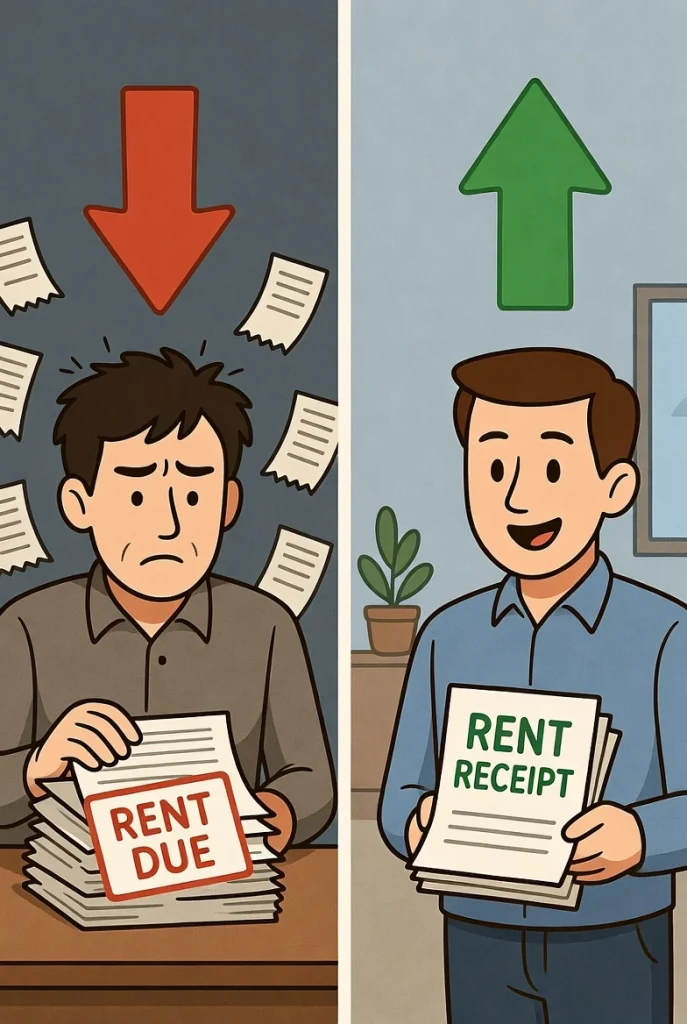
These 12 strategies cover everything from direct negotiation tactics to creative arrangements that landlords in 2026 are genuinely open to. You will not win every one of them, but picking up two or three can make a substantial difference to your monthly budget without a single box packed.
Implementing these strategies can help you save money on rent significantly.
The Current Rent Reality in 2026
To effectively save money on rent, you need to know what your options are when negotiating.
Before negotiating, it helps to understand where rent prices actually stand. The table below gives a broad picture of current two-bedroom rents across North American market types as of mid-2026.
Understanding how to save money on rent can empower you during discussions with your landlord.
| City Type | Average 2-Bedroom Rent (USD) | Average 2-Bedroom Rent (CAD) |
|---|---|---|
| Major Coastal Cities | $2,800 – $4,200 | $3,100 – $4,500 |
| Mid-Size Cities | $1,650 – $2,400 | $2,000 – $2,800 |
| Smaller and Prairie Cities | $1,200 – $1,750 | $1,550 – $2,100 |
To save money on rent effectively, timing your negotiation can be crucial.
The encouraging shift in 2026 is that many landlords are more flexible now than they were during the peak shortage years of 2022 and 2023. Vacancy rates have risen in several markets, and the cost of finding a new tenant, covering vacancy periods, and handling turnover is significant enough that keeping a reliable tenant at a slightly reduced rate is often the financially smarter call for a landlord. That context works in your favour.
Strategies 1 to 6: Negotiation and Lease Tactics
Save Money on Rent by Timing Your Negotiation Right
When you research comparable units, it helps you save money on rent by providing solid evidence.
1. Time Your Request Perfectly
Consider what you can offer in exchange to save money on rent in the long run.
The window of maximum leverage is 60 to 90 days before your lease expires. At that point your landlord still has time to find a replacement tenant if negotiations fail, which means they are more likely to negotiate in good faith rather than feel cornered. Approach too late and they have nothing to lose by saying no. Approach at the right time and they are mentally weighing turnover costs against what it takes to keep you. Turnover typically costs a landlord one to three months of rent in vacancy, cleaning, advertising, and potential repairs. That is real money, and it anchors the negotiation in your favour.
A renewal discount is a great way to save money on rent when you ask the right questions.
2. Research Comparable Units Before You Say a Word
Using your payment history can be a powerful way to save money on rent.
Nothing strengthens a rent negotiation faster than actual data. Before you approach your landlord, spend time on Zillow, Apartments.com, Rentals.ca, or Kijiji pulling current listings for comparable units in your neighbourhood or building. Screenshot listings that show similar square footage, amenities, and location renting for less than you currently pay. Print them or have them ready on your phone. Presenting concrete market evidence turns “I think my rent is too high” into “here is what comparable units are renting for right now.” That is a very different conversation.
3. Offer Something Valuable in Return
Getting agreements in writing is essential to ensure you save money on rent as promised.
Negotiation works best when both sides walk away feeling they gained something. Think about what your landlord values and offer it in exchange for a rent reduction. A longer lease term is often the most appealing option: proposing an 18 or 24-month renewal instead of a standard 12 gives them stability and eliminates the risk of vacancy for an extended period. Setting up automatic monthly payments removes their administrative friction and reduces late payment risk. Offering to handle minor maintenance tasks yourself reduces their ongoing management burden. Any of these, or a combination, can be framed as your side of the trade for a rent concession.
4. Ask Specifically for a Renewal Discount
Adding a roommate is one of the simplest ways to save money on rent without significant changes.
Many property management companies and private landlords have unpublicised renewal incentives for tenants in good standing. These are rarely advertised because landlords only offer them when asked. A straightforward request, framed as “I would like to stay and I am hoping we can agree on a renewal rate that reflects my track record here,” often surfaces a 3 to 8% discount that was available all along. The key is asking directly rather than hinting or complaining. A clear, professional request is far more likely to produce a concrete offer.
5. Use Your Payment History as a Negotiating Asset
Paying multiple months upfront may help you save money on rent by negotiating a lower rate.
Reliable tenants who pay on time, communicate well, and treat the property with care are genuinely valuable to landlords. If you have a solid payment history, say so explicitly. Come to the conversation with a clear record: “I have paid on time for every month of my tenancy and have never required a maintenance call for damage I caused.” Landlords know that finding a tenant with that track record is not guaranteed, and many will adjust their position to keep someone they know is reliable versus taking a chance on an unknown applicant.
Taking on maintenance responsibilities can also be a way to save money on rent.

Switching to a different unit can be a simple strategy to save money on rent.
6. Get Every Agreement in Writing
Any rent reduction, concession, or agreement you reach must be documented in a signed lease addendum before you rely on it. Verbal agreements on rent are notoriously difficult to enforce and are sometimes “forgotten” at the next renewal. A simple one-page addendum referencing the unit, the original lease, the agreed monthly rent, and the term it applies to is all you need. Both parties sign, both keep a copy. This protects you and keeps the landlord accountable to what was agreed.
Strategies 7 to 12: Creative and Longer-Term Solutions

7. Add a Roommate, Even Temporarily
Bringing in a reliable roommate to share the unit is the single fastest way to reduce your effective housing cost. Splitting a $2,200 two-bedroom with one person drops your share to $1,100 overnight. Even a temporary arrangement of 6 to 12 months can give you the financial breathing room to build savings, pay down debt, or prepare for a more permanent solution. Check your lease for any subletting or occupancy clauses first, and if you need landlord approval to add an occupant, frame it professionally and request it in writing.
8. Offer to Pay Multiple Months Upfront
Landlords who manage cash flow carefully often place high value on predictable, guaranteed income. Offering to pay 3, 6, or 12 months of rent upfront in exchange for a monthly rate reduction eliminates their vacancy and late payment risk entirely for that period. The discount you negotiate needs to be worth giving up that liquidity, so aim for at least 5 to 10% off the monthly rate. This strategy works best with private landlords rather than large corporate property managers, who may have accounting restrictions that complicate advance payments.
9. Take on Maintenance Responsibilities
Landlords pay for lawn care, snow removal, gutter cleaning, and minor repairs either through management companies or their own time. If you are handy and willing, offering to take over specific maintenance tasks in exchange for a monthly rent reduction is a legitimate trade that benefits both parties. Be specific about what you are offering: “I will handle all lawn mowing from May through September and snow clearance from November through March in exchange for a $100 monthly reduction.” Specificity makes the offer credible and prevents disputes over expectations later.
10. Switch to a Different Unit in the Same Building
Sometimes the most straightforward path to lower rent is asking whether a comparable but less premium unit in the same building is available. A unit on a lower floor, facing a less desirable view, or slightly smaller in square footage may rent for $150 to $300 less per month than your current unit. If you are flexible on those factors and your landlord manages multiple units, requesting a transfer within the building preserves your established relationship while meaningfully reducing your monthly cost. The landlord also avoids a vacancy and the cost of finding a new tenant for your current unit.
11. Check Rent Stabilisation Rules and Local Relief Programs
In certain cities and provinces, rent increase limits and stabilisation rules restrict how much a landlord can raise your rent annually regardless of market conditions. Ontario, British Columbia, and several US cities including New York and San Francisco have active rent stabilisation or control frameworks. If you are in a covered jurisdiction and your landlord has raised your rent above the legal guideline, you have the right to dispute it through the relevant tribunal or housing authority. Separately, local rental assistance programmes continue to operate in both countries in 2026. Our full guide on free rental assistance in the USA and Canada covers the active programmes and how to access them quickly.
12. Improve Your Credit Score Before Renewal
Some landlords, particularly in competitive rental markets, offer preferential renewal rates to tenants with strong credit profiles because a higher score signals lower financial risk. If your credit has improved significantly since you first signed your lease, it is worth mentioning this during renewal negotiations. More practically, a stronger credit profile improves your options if you do eventually decide to move, or if you start planning toward homeownership. Our guide on renting with bad credit in 2026 covers the credit-building steps that move the needle most efficiently.
Potential Savings Breakdown
Here is a realistic look at what each strategy can save monthly, based on what tenants in 2026 markets are reporting.
| Strategy | Realistic Monthly Savings | Difficulty |
|---|---|---|
| Negotiation with comparable listings | $150 – $450 | Medium |
| Adding a roommate | $400 – $900+ | Medium |
| Paying multiple months upfront | $100 – $300 | Low |
| Maintenance trade arrangement | $80 – $200 | Low to Medium |
| Switching to a lower-cost unit | $150 – $350 | Low |
| Renewal discount request | $75 – $250 | Low |
Combining even two or three of these approaches can realistically put $300 to $700 back in your pocket each month. That kind of monthly savings, redirected consistently into a savings account, can build a meaningful down payment fund over 18 to 24 months. Our 2026 rent vs buy calculator can help you see what that timeline could look like for your specific market and income.
Understanding local rent stabilisation rules can also help you save money on rent.
The Bigger Picture: Lowering Rent as a Step Toward Something Better
Improving your credit score can indirectly help you save money on rent by opening up options.
Reducing your monthly rent is not just about short-term relief. Every dollar you free up from your housing cost is a dollar that can go toward financial stability, debt reduction, or building the savings that eventually change your housing situation permanently. Whether your goal is simply more breathing room in your budget, or a longer-term move toward homeownership, the strategies above are practical starting points.
If the broader challenge is feeling stuck in the rent cycle, our guide on breaking free from high rent in 2026 covers the bigger-picture strategies that real people are using this year. And if you are starting to think seriously about whether buying makes more sense than continuing to rent in your market, our 2026 housing affordability report breaks down where the numbers genuinely favour buyers right now.
For more details on how to save money on rent, see our resources on tenant rights.
Frequently Asked Questions
Make sure to check out our guide on how to save money on rent and utility bills for even more tips!
Can I actually negotiate my rent lower in 2026?
Yes, in many markets. The key conditions that favour tenants negotiating in 2026 are: rising vacancy rates in your area, a track record of on-time payments, approaching the conversation 60 to 90 days before lease expiry, and having comparable listing data to support your position. You will not win every negotiation, but many tenants who ask get something, whether that is a reduced rate, a free month, or a concession on parking or utilities.
What is the best thing to say when asking for a rent reduction?
Keep it professional, specific, and solution-focused. Something like: “I want to stay in this unit and I have been a reliable tenant for [X] years. I have been looking at current market rates and comparable units nearby are renting for [amount]. I would like to discuss renewing at a rate that reflects my track record and the current market.” Then present your comps. Avoid ultimatums unless you are genuinely prepared to move. A collaborative tone is more effective than a confrontational one.
When considering your options, remember that knowing how to save money on rent can change your future.
How much can I realistically expect to save on rent without moving?
Tenants who negotiate effectively typically save between $100 and $450 per month on the rent itself. Adding a roommate can double or triple those savings. Combining two or three strategies from this list, including maintenance trades or upfront payment arrangements, can realistically produce $400 to $800 in monthly savings in many markets. Results depend heavily on your specific landlord, market conditions, and how well you present your case.
What if my landlord refuses to negotiate?
Some will not budge, particularly large corporate property managers who set rates centrally. If direct negotiation fails, your remaining options without moving are: adding a roommate to split costs, pursuing local rental assistance programmes, reviewing whether your jurisdiction has rent increase limits that may apply, or targeting a lower-cost unit within the same building if one becomes available. A refusal to negotiate is not the end of the conversation, it just redirects which strategies make the most sense to pursue.
Is it worth adding a roommate just to lower rent?
For most people, yes, especially if the arrangement is time-limited and the roommate is someone you know and trust. The financial impact is immediate and significant. Splitting a $2,000 two-bedroom saves $1,000 per month compared to living alone. Over 12 months that is $12,000, which is a meaningful down payment contribution in many markets. The trade-off is reduced privacy and the logistics of shared living, which is a personal calculation, but the financial case is often compelling.
Does improving my credit score actually help with rent costs?
Directly, it can help in renewal negotiations with some landlords, and it opens access to a wider range of rental options. More importantly, improving your credit score while renting is an investment in your long-term housing options. A better score means access to better mortgage products at lower rates when you eventually move toward buying, which saves significantly more than any short-term rent discount. Think of credit improvement as a parallel track to your immediate rent reduction efforts.
For a full breakdown of your legal protections as a renter in 2026, including how to fight hidden fees, illegal rent increases, and unfair deposit deductions, see our 2026 Renters Rights Guide: Protect Yourself from Hidden Fees and Bad Landlords.
References
- Zillow Rental Market Report 2026
- Rentals.ca Market Trends 2026
- CMHC Rental Market Statistics 2026
- Consumer Financial Protection Bureau: Tenant Rights Resources
For a combined approach to reducing both rent and utility bills, our guide on How to Cut Your Rent and Utilities Bill in Half in 2026: 15 Proven Strategies covers 15 practical strategies that can save $400 to $1,000 or more per month.

I’ve spent several years researching U.S. and Canadian housing markets, with a focus on practical, data-driven strategies for everyday homebuyers. My goal is to make complex market trends easier to understand and help readers make informed real estate decisions. While I strive to keep all information current and accurate, housing markets change quickly, so always consult qualified real estate, financial, or professionals before making decisions.