
Finding affordable homes to rent in Canada in 2026 is genuinely possible, but it requires looking beyond Toronto, Vancouver, and Montreal. Renters who are willing to explore Prairie cities, Atlantic Canada, and smaller Ontario markets are finding real value that simply does not exist in the country’s most expensive urban centres.
National averages mask an enormous range: a two-bedroom that costs $3,200 per month in Toronto rents for $1,650 in Edmonton and $1,550 in Saskatoon. Same country, same year, very different financial reality. For those seeking Affordable rentals Canada 2026, there are many options available. More and more people are discovering Affordable rentals Canada 2026 in regions that offer better living conditions at lower costs.
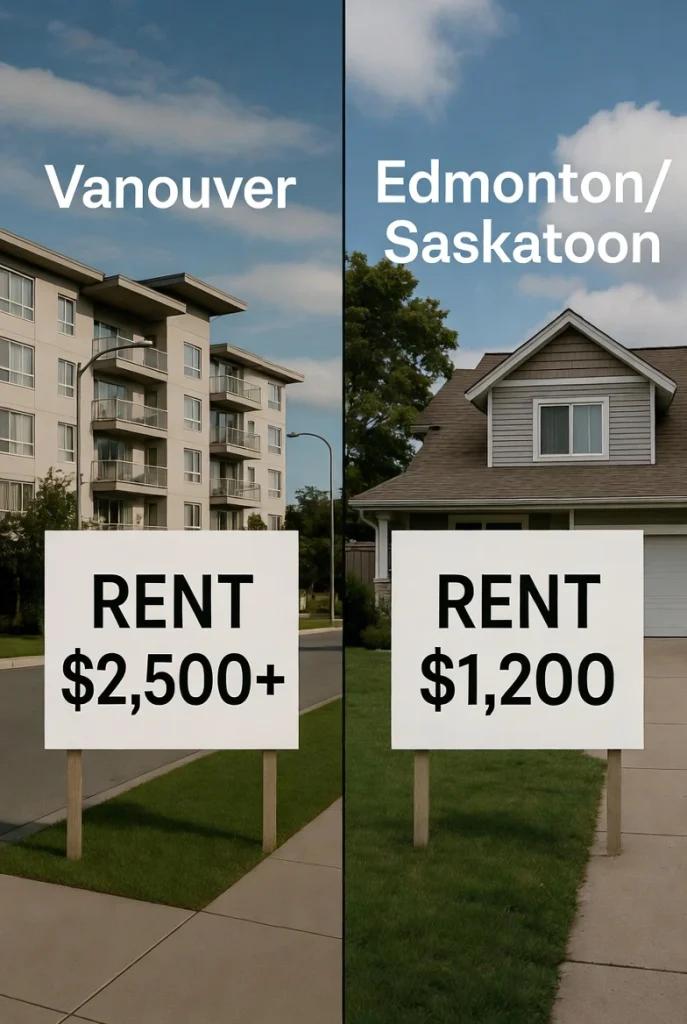
This guide covers the eight most affordable rental markets in Canada right now, the property types that offer the best value in 2026, practical tips for finding deals, and what to expect if you are considering a move to a more affordable city.
Exploring Affordable rentals Canada 2026 is crucial for anyone looking to save money while enjoying a good quality of life.
Canada Rental Market Snapshot: May 2026
Exploring Affordable Rentals Canada 2026 for Better Living
Understanding the landscape of Affordable rentals Canada 2026 allows renters to make informed decisions.
For those searching for Affordable rentals Canada 2026, it is essential to consider various factors such as location and market trends.
The table below shows current average rents and vacancy rates across Canada’s main rental regions. Vacancy rate matters as much as the rent itself: a higher vacancy rate means more negotiating power for renters and more available options to choose from.
| Province and Region | Average 1-Bedroom Rent | Average 2-Bedroom Rent | Vacancy Rate | Best For |
|---|---|---|---|---|
| Alberta (Edmonton) | $1,250 | $1,650 | 6.8% | Families, young professionals |
| Saskatchewan (Saskatoon) | $1,180 | $1,550 | 7.2% | Budget-conscious renters |
| Manitoba (Winnipeg) | $1,320 | $1,720 | 5.9% | Stable long-term rentals |
| Atlantic Canada | $1,350 – $1,650 | $1,800 – $2,200 | 6.5%+ | Quieter lifestyle, growing economy |
| Ontario (outside GTA) | $1,650 – $2,100 | $2,100 – $2,600 | 3.8% | Commuters and remote workers |
| BC Interior | $1,550 – $1,950 | $2,000 – $2,500 | 4.2% | Nature lifestyle, lower BC costs |
Saskatchewan and Alberta are the clear affordability leaders in 2026. Vacancy rates above 6% in both provinces mean renters have genuine choice and negotiating leverage, a combination that is rare in most Canadian markets right now.
While many are aware of the benefits of Affordable rentals Canada 2026, few truly understand the opportunities that exist in lesser-known markets.
Finding the best deals requires knowledge of Affordable rentals Canada 2026 and the current rental landscape.
In 2026, Affordable rentals Canada 2026 will continue to attract attention as more people look for budget-friendly living.
As the rental market evolves, those seeking Affordable rentals Canada 2026 must stay informed.
Top 8 Affordable Rental Markets in Canada in 2026
1. Edmonton, Alberta
Edmonton consistently ranks as one of the best value rental markets in Canada in 2026. A well-maintained two-bedroom condo or house in a good neighbourhood rents for $1,500 to $1,900 per month, and the city’s job market in energy, healthcare, technology, and government employment provides a strong foundation for people relocating from higher-cost cities. Alberta has no provincial income tax, which means more of your earnings stay in your pocket alongside the lower rent. The city has invested significantly in transit, culture, and green space over the past decade, and the quality of life is considerably higher than its rent prices suggest. Vacancy rates above 6% give renters real leverage, and many landlords are offering incentives to fill units.
2. Saskatoon and Regina, Saskatchewan
Saskatchewan offers the lowest average rents of any major Canadian province in 2026. Saskatoon’s two-bedroom average sits below $1,600 in most neighbourhoods, and Regina is comparable. Both cities offer clean, modern rental stock, practical amenities, and a stable local economy built on agriculture, potash, and public sector employment. Saskatoon in particular has developed a stronger arts and dining scene than its national profile might suggest. Saskatchewan also has no foreign buyer restrictions and relatively accessible pathways for people looking to eventually transition from renting to buying, with average home prices still well below the national average. For renters who want the lowest possible monthly housing cost in a functional Canadian city, this province is the strongest option available right now.
3. Winnipeg, Manitoba
Winnipeg is consistently underestimated as a rental market. Average two-bedroom rents sit around $1,720, and the city offers something most Prairie markets do not: a large selection of older houses and apartments with full basements, which provide genuine storage, living space, or potential suite income. Manitoba’s rental market is stable rather than volatile, which makes it attractive for renters who want to settle in for a few years without worrying about aggressive annual increases. The city has a strong arts community, multiple universities, a growing tech sector, and a cost of living that makes daily expenses noticeably cheaper than major urban centres.
Be proactive in your search for Affordable rentals Canada 2026 to maximize your chances of finding the perfect home.
4. Calgary, Alberta
Calgary is more expensive than Edmonton but remains meaningfully more affordable than Ontario or BC urban markets. Average two-bedrooms sit in the $1,900 to $2,200 range depending on the neighbourhood and building age. The city has seen significant new construction in recent years, which means a strong supply of newer rental units with modern finishes at prices that would be impossible to find in Toronto or Vancouver. Calgary’s economy is diversifying beyond energy, with growing finance, technology, and professional services sectors that provide employment stability for residents. The no-provincial-tax advantage applies here as well, and the city’s proximity to the Rockies remains one of its most compelling quality-of-life features.
5. Halifax and Moncton, Atlantic Canada
Atlantic Canada’s rental markets have tightened since the pandemic era relocation wave but remain meaningfully more affordable than Ontario or BC. Halifax’s two-bedroom average sits in the $1,900 to $2,200 range, and Moncton’s is lower still at $1,600 to $1,900. Both cities offer a slower pace of life, strong community character, and access to genuinely beautiful natural surroundings. Moncton in particular offers strong value: it is a growing city with improving infrastructure, bilingual employment opportunities, and rents that have not escalated to the degree that Halifax experienced during the pandemic boom. The Atlantic provinces also have active immigration and settlement programmes that have contributed to economic growth and service development in recent years.
6. London and Windsor, Ontario
For renters who need or prefer to stay in Ontario, London and Windsor offer a dramatically different cost picture than the Greater Toronto Area. London’s two-bedroom average sits around $2,000 to $2,400, and Windsor is comparable. Both cities are well-connected to Toronto by highway and rail for remote workers who need occasional access to the GTA. Windsor has the added advantage of proximity to Detroit, which provides cross-border employment and shopping options. London has a large university presence that drives consistent rental demand and service sector development. Neither city matches the Prairie markets for pure affordability, but within Ontario they represent the strongest value options for renters who are not commuting to Toronto daily.
7. Interior BC: Kelowna and Kamloops
BC’s interior offers a compelling alternative for renters who want the British Columbia lifestyle without Vancouver prices. Kelowna and Kamloops both sit in the $1,800 to $2,300 range for two-bedrooms, which is $800 to $1,200 per month less than comparable units in Vancouver or Victoria. The Okanagan Valley around Kelowna is one of Canada’s most scenically striking regions, with wine country, lake access, and outdoor recreation that attract a growing population of remote workers. Both cities have improved their employment bases beyond resource industries in recent years, making them viable long-term relocation destinations rather than just lifestyle choices for people who can work from anywhere.
8. Smaller Prairie and Atlantic Towns
Lethbridge and Red Deer in Alberta, Prince Albert in Saskatchewan, Saint John and Fredericton in New Brunswick, and Charlottetown in Prince Edward Island all offer rents that routinely fall below $1,400 for a two-bedroom. These smaller centres are not for everyone, but for remote workers or people in professions with regional employment, they offer a quality of life and financial breathing room that is simply not available in any major Canadian city. Property prices in many of these towns are also low enough that transitioning from renting to buying is achievable within two to three years of disciplined saving, which is a realistic path that does not exist in most larger markets.

Best Types of Affordable Homes to Rent in Canada in 2026
Where you rent matters, but what you rent affects your monthly cost just as much. These property types offer the best combination of value and livability in Canadian markets right now.
- Basement suites. The most affordable rental option in most Prairie and Atlantic markets, often ranging from $900 to $1,500 per month for a self-contained one or two-bedroom suite. Many are well-maintained and include utilities. Trade-offs are limited natural light and shared laundry in some buildings.
- Duplex and triplex units. These typically rent for less than comparable units in larger purpose-built buildings while offering more space and a more personal landlord relationship. Common in older Prairie and Atlantic neighbourhoods.
- Older apartments in established areas. Purpose-built rental buildings from the 1970s and 1980s in good neighbourhoods almost always rent for less than new luxury buildings while offering comparable or larger square footage. Finishes are older but value per square foot is consistently better.
- Townhouses. An excellent middle ground between apartment living and renting a house. More space, often a yard or patio, and usually better sound isolation than stacked apartments. In Prairie markets, townhouse rents are often comparable to large apartment rents in Ontario cities.
- Rural and small-town homes. Full houses with yards in smaller centres often rent for $1,200 to $1,600 per month in Prairie provinces and Atlantic Canada. For remote workers, this category offers the highest space-to-cost ratio available in the country.
Practical Tips for Finding Affordable Rentals in Canada in 2026
- Start your search 60 to 90 days before you need to move. The best units in affordable markets get snapped up quickly once they are listed. Starting early gives you time to be selective rather than pressured.
- Use Facebook Marketplace and local community groups alongside Rentals.ca and Kijiji. Many private landlords list exclusively in local Facebook groups, and these listings often attract fewer applicants than major listing platforms. Some of the best rental deals in Prairie cities are found this way.
- Negotiate the rate. In markets with vacancy rates above 5%, many landlords have flexibility they will not offer unless asked. Approach with your payment history, a solid application package, and a specific counter-proposal.
- Consider taking over an existing lease. Lease takeovers, where a current tenant assigns their remaining lease to you, sometimes lock in rates that were negotiated before recent price increases. Search for lease takeovers on Kijiji or lease-specific Facebook groups in your target city.
- Ask about utilities upfront. Some Prairie landlords include heat in the rent during winter months, which can represent $150 to $200 in monthly value that does not show up in the headline rental price. Always ask what is and is not included before comparing listings.
For more detailed guidance on how to strengthen your rental application and deal with landlords effectively, our guide on renting in Canada with credit challenges in 2026 covers the full application process. And if you are at the stage of evaluating whether to rent or buy in your target market, our guide to the best affordable housing markets in Canada for buying in 2026 gives a detailed breakdown of purchase prices and ownership costs alongside rental comparisons.
What the Numbers Look Like After Relocating
The financial impact of relocating from a high-cost city to an affordable Prairie or Atlantic market is significant enough that it is worth spelling out concretely. A renter paying $2,800 per month in Toronto who moves to Edmonton and pays $1,650 saves $1,150 per month. Over 12 months that is $13,800 in savings on rent alone, before accounting for lower general cost of living, lower transit costs if they no longer need a car for long commutes, and the absence of provincial income tax in Alberta. Directed consistently into savings, that difference can represent a substantial down payment within two to three years.
For renters considering a cross-city or cross-province move specifically to reduce housing costs, our guide to relocating for cheaper housing in 2026 covers how to evaluate markets, plan the move, and make the financial case for different destinations. And if the broader question is whether renting or buying makes more sense in your new target market, our 2026 rent vs buy comparison walks through the real numbers for different city types.
For a deeper understanding of Affordable rentals Canada 2026, consider exploring various online resources.
Frequently Asked Questions
Which Canadian city has the cheapest rent in 2026?
Among cities with meaningful employment and amenities, Saskatoon and Regina in Saskatchewan consistently offer the lowest average rents in 2026, with two-bedrooms available under $1,600 in good neighbourhoods. Smaller centres in the Prairies and Atlantic Canada have even lower rents but with more limited employment options. For renters who can work remotely, towns like Lethbridge, Red Deer, Moncton, and Fredericton offer two-bedrooms under $1,400 in many cases.
Is Edmonton or Calgary cheaper to rent in 2026?
Edmonton is consistently cheaper. Average two-bedroom rents in Edmonton sit around $1,650 compared to $1,900 to $2,200 in Calgary. Edmonton also has a higher vacancy rate (around 6.8% versus 5.5% in Calgary), which gives renters more negotiating leverage. Both cities have no provincial income tax and strong employment markets, but Edmonton offers more value per dollar for renters in 2026.
All tenants should consider the benefits of Affordable rentals Canada 2026 when planning their next move.
Are Prairie city jobs good enough to justify moving from Toronto or Vancouver?
Renters must remain vigilant for the best opportunities in Affordable rentals Canada 2026.
There are numerous options available when searching for Affordable rentals Canada 2026, so be sure to leverage local listings.
For many sectors, yes. Edmonton and Calgary both have strong employment in energy, healthcare, technology, finance, and government. Salaries in these sectors are generally comparable to Ontario equivalents when adjusted for the absence of provincial income tax. For remote workers, the employment question is entirely personal and the financial case for relocating is even stronger since income stays constant while housing costs drop dramatically.
The future of Affordable rentals Canada 2026 looks promising for those willing to explore different markets.
For an extensive overview of Affordable rentals Canada 2026, make use of community resources and local experts.
What is the best way to find cheap rentals in Canada in 2026?
Note that Affordable rentals Canada 2026 can vary widely by region, so research is key.
Families looking for Affordable rentals Canada 2026 should prioritize areas with good schools and amenities.
Combining Rentals.ca, Kijiji, and local Facebook Marketplace and community groups gives you the broadest reach. Facebook groups are particularly valuable for finding private landlords who list exclusively there and attract fewer competing applications. Starting your search 60 to 90 days before your target move date gives you time to be selective. In affordable markets with higher vacancy rates, contacting landlords directly and asking about unpublicised availability or upcoming vacancies also sometimes surfaces options before they are formally listed.
When discussing Affordable rentals Canada 2026, remember to consider your long-term goals and lifestyle preferences.
Is it worth renting in a smaller Canadian city if I eventually want to buy?
In many cases, strongly yes. Renting in a Prairie or Atlantic city while saving the difference between what you would have paid in Toronto or Vancouver can build a substantial down payment within two to three years. Home prices in these markets are also far more accessible, meaning the down payment you need is smaller and the mortgage payment on entry-level homes is often comparable to or only slightly above rental costs. The combination of lower rent, lower purchase prices, and faster savings accumulation makes the path from renting to owning meaningfully shorter than in high-cost urban markets.
If you are renting for the first time, our guide on Best Affordable Apartments for New Renters in Canada and USA 2026 covers the most accessible markets in both countries and the practical steps that set new renters up for success from day one.
References
- CMHC Rental Market Report 2026
- Rentals.ca National Rent Report 2026
- Canadian Real Estate Association Market Reports 2026

I’ve spent several years researching U.S. and Canadian housing markets, with a focus on practical, data-driven strategies for everyday homebuyers. My goal is to make complex market trends easier to understand and help readers make informed real estate decisions. While I strive to keep all information current and accurate, housing markets change quickly, so always consult qualified real estate, financial, or professionals before making decisions.